
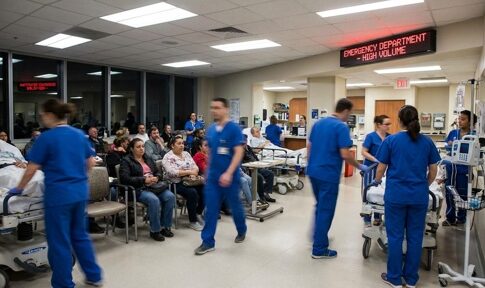
A Dutch hospital’s six-week quarantine for 12 workers over a low‑risk hantavirus exposure is a sharp reminder of how quickly public-health caution can collide with personal liberty and common sense.
How A Protocol Slip Turned Into A Six-Week Lockdown
Radboud University Medical Center in Nijmegen admitted a hantavirus patient on May 7, a passenger from a cruise ship who became part of a wider, closely watched international outbreak. Between roughly May 7 and 11, hospital staff handled the patient’s blood and urine samples under what officials call “strict procedures,” but not the “very strictest” level Dutch guidance requires for this strain. Once the lapse was discovered, infection-control officers identified 12 potentially exposed workers and ordered them into six weeks of quarantine.
Health Minister Sophie Hermans told parliament that the actual chance of infection for these staff members is small, describing the hospital’s response as “playing it safe” with a serious virus. Dutch authorities stress that this hantavirus does not readily spread from person to person and that patient care at Radboudumc continues uninterrupted. There have been no public reports of any quarantined worker becoming ill, even as they face a lockdown matching the virus’s upper incubation window.
Understanding Hantavirus Risk Versus Government Reaction
Hantaviruses are rodent-borne pathogens that usually infect humans when people inhale aerosolized particles from rodent urine, droppings, or saliva, or come into direct contact with them. They can cause severe disease, like hemorrhagic fever with renal syndrome in Europe and Asia, or cardiopulmonary syndromes in the Americas, sometimes with high fatality rates. Yet most hantaviruses rarely spread human-to-human; authorities emphasize that only certain strains, such as one in South America, have shown limited person-to-person transmission, and that this Dutch-linked strain is not behaving that way.
Despite that low transmission risk, Dutch guidelines demand heightened biosafety steps for this particular strain, especially for lab handling of blood and urine. The hospital followed strong infection-prevention routines but missed the top-tier protocol, triggering the current response. The World Health Organization notes that suspected hantavirus cases worldwide are being isolated under strict supervision and says there is no sign of a major outbreak at this point. However, officials caution that the long incubation period means more cases might emerge, a reminder that health systems are operating with one eye on worst-case scenarios.
Post-COVID Precaution And The Cost To Individual Freedom
The long quarantine at Radboudumc shows how Western institutions increasingly choose maximum restriction when dealing with high-consequence pathogens, even when the data suggest low spread. Twelve professionals are sidelined for six weeks, causing staffing strain, personal disruption, and understandable anxiety despite repeated assurances that infection is unlikely. European hospitals, shaped by the COVID era, now treat even minor protocol deviations as reasons for sweeping measures, favoring institutional protection over the day-to-day liberties of individual workers.
For Americans who lived through shutdowns, school closures, and emergency orders that often ran ahead of settled science, this case is a warning sign. A single cruise-ship patient and a relative protocol misstep have led to an aggressive response in a country known for tight regulation and generous social protections. That combination can normalize long quarantines, mandatory monitoring, and intrusive oversight, even when evidence does not point toward widespread danger, a pattern conservatives fear could resurface under future global or federal health pressures.
Why This Matters For U.S. Constitutional And Conservative Priorities
The Netherlands incident occurs as medical systems worldwide refine their playbooks for emerging diseases, and those templates influence how American bureaucrats think. International bodies and foreign ministries are reinforcing a doctrine where “playing it safe” routinely justifies far-reaching controls. Conservatives who value limited government and constitutional safeguards see a real risk: health emergencies becoming a recurring pretext for quasi-lockdowns, coercive employment rules, and diminished due process if U.S. agencies import the same mindset without strong political pushback.
How do you mishandle hantavirus when you know it has a 30% mortality rate? Do the Dutch use DEI too:
Reported hantavirus protocol breach at hospital forces 12 employees into 6-week quarantine https://t.co/hQ4Bwy9fwV #FoxNews— Allen Huggins (@AllenHuggins8) May 13, 2026
In this case, Dutch leaders promise investigations and procedural tightening, not broader crackdowns. Yet the pattern is familiar: elite institutions make decisions behind closed doors, everyday workers bear the burden, and the public is told the threat is low but the restrictions must be high. For Trump-era America, the lesson is straightforward. Vigilance about real biosecurity dangers must go hand in hand with vigilance against unbounded health powers that can sideline citizens’ rights faster than any virus spreads.
Sources:
Dutch hospital quarantines 12 over breach of hantavirus protocol
Dutch hospital quarantines 12 over breach of hantavirus protocol – DHA Press
Dutch hospital quarantines 12 over breach of hantavirus protocol – The Business Standard
Hantavirus protocol breach at Dutch hospital as medics race to curb spread – OODA Loop
Dutch hospital quarantines 12 over breach of hantavirus protocol – Philenews
Hantavirus protocol breach at Dutch hospital – The Express Tribune