
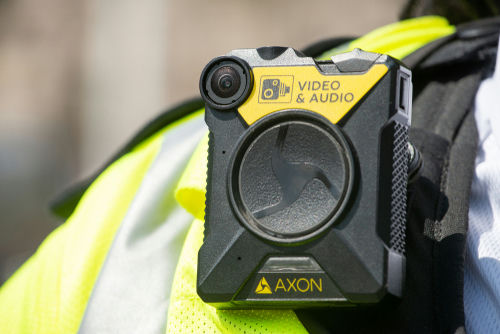
ICE now claims every arrest team will have a body camera, but repeated deadly shootings with no footage suggest a system that protects the agency more than the public.
Story Snapshot
- ICE now has a formal policy requiring body cameras during most enforcement activities.
- Years after funding and directives, many agents in deadly shootings still had no cameras.
- Key gaps and exceptions in the policy leave big holes in real accountability.
- Both conservatives and liberals see this as another case of federal promises without delivery.
What ICE’s New Body Camera Rule Actually Says
In early 2024, U.S. Immigration and Customs Enforcement adopted a formal body camera directive saying officers must wear cameras for “all aspects” of enforcement activities, with only limited investigative exceptions. The detailed guidance, updated in February 2025, tells officers to turn cameras on at the start of an enforcement action and keep recording until the activity ends. If an officer does not activate a camera, they must write an explanation afterward. The policy also bars recording people just for exercising free speech rights.
Internal Department of Homeland Security documents describe the program as covering all ICE law enforcement work, with clear rules for activation, deactivation, storage, and review of footage after serious injury or death. ICE leadership says the cameras should “promote public trust” and increase transparency by accurately recording arrests, searches, removal flights, and responses to violent disturbances. On paper, this looks like a strong promise: if ICE is using force in public, the camera should be rolling, and there should be a record.
From Pilot Programs to Slow, Patchy Rollout
Before this nationwide push, ICE tested cameras in a pilot program in several cities, including Houston, New York, and Newark. A later assessment found no major technical problems that would block wider use, meaning the agency could move ahead if it chose. In 2024, ICE announced it would deploy roughly 1,600 cameras to agents and officers in five cities: Baltimore, Buffalo, Detroit, Philadelphia, and Washington, D.C., as a first wave. ICE officials said broader expansion would depend on more money from Congress, putting rollout at the mercy of politics.
Congress did, in fact, get involved. A bill called the Immigration Enforcement Staff Body Camera Accountability Act would require the heads of ICE and Customs and Border Protection to ensure all frontline immigration enforcement staff wear cameras during official operations. At the same time, reporting shows that under President Trump, the administration moved to cut funding for the ICE body camera program and trim oversight budgets, slowing or blocking full deployment. This mix of pilot success, partial funding, and later budget cuts created a classic Washington pattern: big promises, uneven follow-through.
Deadly Incidents With No Cameras Rolling
The gap between policy and reality became painfully clear in a series of fatal ICE shootings. In a June 2023 incident in Houston, agents fatally shot Lorenzo Salgado Araujo during a vehicle stop. The Department of Homeland Security later admitted the officers were not issued body cameras, even though Congress had granted about $20 million for cameras years earlier. Passengers in the van called the official account “a lie,” but without camera footage, the public is left with clashing stories and no clear proof.
Similar problems surfaced in other cities. In Chicago, a deadly shooting reported in September 2025 involved ICE officers who also lacked cameras, with a senior official confirming cameras were still not in use across the agency. In Minneapolis, an ICE agent who shot Renee Good in January 2026 was not wearing a body camera and instead recorded part of the encounter on a personal cellphone. Using personal phones instead of official cameras raises serious questions about evidence integrity and control, and feeds both left and right fears about a government that hides mistakes while insisting it is transparent.
Built-In Loopholes and Enforcement Blind Spots
Critics looking closely at ICE’s written rules say the problems are not just slow rollout. They argue that the 2025 policy leaves major blind spots. One detailed analysis notes that ICE does not clearly require cameras during vehicle pursuits or while transporting people to detention centers. These are exactly the moments when force, abuse, or accidents are most likely, yet the cameras may be off. The same analysis says ICE bars recording inside detention facilities at all, which means conditions there remain hidden from public view.
The protests in Maine aren't random unrest. They're a response to a specific set of confirmed facts:
Joan Sebastian Guerrero was work-authorized confirmed by DHS Secretary Mullin to Sen. King. He was NOT the target of the warrant. Security footage shows the vehicle driving away…
— 𝐌𝐈𝐂𝐇𝐀𝐄𝐋 𝐎𝐋𝐈𝐏𝐇𝐀𝐍𝐓 (@MichaelOliphant) July 15, 2026
ICE policy also lets officers skip activation when they claim “operational-security” concerns, a broad term that can cover many situations. A February 2025 summary of Directive 19010.3 points out that activation can be avoided when recording might reveal sensitive investigative techniques. Congressman Cleo Fields has warned these broad exceptions function as loopholes that allow officers to decide when not to record, even during controversial operations. Combined with slow deployment and budget cuts, these gaps mean that a camera mandate does not guarantee real oversight.
Why This Feeds the “Elites vs. Everyone Else” Story
For many Americans, this story fits a pattern they have seen for years. Federal leaders announce a reform — here, body cameras to improve immigration enforcement transparency — and then fail to deliver full, honest implementation. Policy language sounds tough, but agents in the field lack basic gear during shootings, or have rules that let them turn cameras off when things get risky. Communities are told to trust the system, yet they are denied video proof when someone is killed, and investigations stay under tight federal control.
That fuels anger on both the right and the left. Conservatives see more money going to federal agencies with little proof of better safety or respect for citizens. Liberals see vulnerable people facing deadly force from officers who are neither fully watched nor fully accountable. Researchers note that past federal camera pilots did not clearly cut uses of force or complaints, despite high costs, raising doubts that cameras alone can fix deep cultural and structural problems in immigration enforcement. Many people conclude that Washington’s “solutions” mainly protect the institution, not the public.
What Real Accountability Would Look Like
Experts and advocates across the political spectrum are starting to outline what stronger oversight would require. They call for full publication of ICE’s camera activation rates and written explanations when cameras are not used, so the public can see how often officers follow the rules. They also urge audits of body camera procurement and distribution, to learn why money granted for cameras did not result in cameras on officers in Houston, Chicago, and Minneapolis. Some want outside reviews of detention facilities and transport operations, where cameras are now barred or not clearly required.
Others push for faster, automatic release of footage after serious injury or death, which ICE’s own policy suggests but has not yet delivered in practice. Civil rights groups argue that local prosecutors and communities should not have to beg federal agencies for evidence when someone is killed during an immigration arrest. Whether you worry more about government waste, or about abuse of power against immigrants and minorities, these failures around ICE’s body camera program look like one more sign that the federal government talks about accountability while leaving the people with very little of it.
Sources:
cbsnews.com, ice.gov, bostonglobe.com, immpolicytracking.org, reuters.com, rstreet.org, abc7ny.com, dhs.gov, theconversation.com, americanimmigrationcouncil.org, facebook.com