President Trump says the U.S. could expand strikes to Iranian infrastructure unless Tehran agrees to negotiations agree to his terms for reopening the Strait of Hormuz, raising the stakes for ordinary people caught between war and politics.
Story Snapshot
- Trump says nightly U.S. airstrikes on Iran will continue and could soon hit bridges and power plants unless Iran returns to talks.
- U.S. Central Command reports hundreds of recent strikes aimed at Iranian military sites near the Strait of Hormuz, a key global shipping lane.
- The White House frames the threats as leverage to force a deal; critics warn that targeting civilian infrastructure could raise serious questions under the laws of armed conflict and disastrous.
- Years of war, sanctions, and blockade have not yet forced Iran to change course on controlling the Strait, suggesting more damage with no clear end.
Trump’s New Ultimatum: Bridges and Power Plants “Next Week”
U.S. President Donald Trump has warned that if Iran does not reach an agreement “by next week,” American forces will begin bombing the country’s power plants and bridges. In a recent interview, he said, “Next week it gets really bad for them because next week comes the power plants. Next week comes the bridges,” adding that U.S. strikes “will continue until I say enough.” He tied these threats directly to Iran coming “to the table” to negotiate reopening the Strait of Hormuz and ending attacks on commercial ships.
These statements are not new for Trump but mark a renewed focus on civilian infrastructure as leverage. Since early April, he has repeatedly vowed that every bridge in Iran could be “obliterated” and every power plant “rendered nonfunctional” if Tehran refuses his terms. In one press briefing, he described “total annihilation” of Iranian bridges and power facilities, saying it could be done “over a span of four hours” if the U.S. chose to act. The message is clear: agree to his deal on the Strait and the wider war, or watch the basic systems of modern life in Iran be bombed into the “Stone Ages.”
Airstrikes Already Escalating Around the Strait of Hormuz
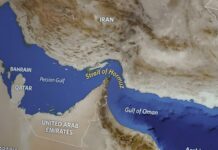
While these threats focus on future targets, the military campaign is already intense. U.S. Central Command (CENTCOM) says American forces have just completed a third round of strikes this week, hitting about 140 Iranian military targets, including missile and drone sites, naval assets, and communication networks. Across three nights, CENTCOM reports more than 300 targets struck under Trump’s orders, aimed at degrading Iran’s ability to attack civilian mariners and commercial vessels in the Strait of Hormuz. Earlier in the conflict, a joint U.S.–Israeli effort known as Operation Epic Fury had already hit roughly 6,000 targets in Iran, including dozens of ships and minelayers.
The White House and Pentagon say these strikes are meant to protect trade and energy supplies that pass through the Strait, one of the most important waterways for global oil and gas. CENTCOM insists commercial vessel traffic “continues” through the corridor despite Iranian claims that it is closed, arguing that U.S. operations are keeping the route open. Trump has framed the campaign as a “20-to-1” retaliation strategy, boasting that “every time they hit us, we’re going to hit them 20.” For Americans at home, this can sound like strength and deterrence. For people living in the region, it means constant danger and the fear that tomorrow’s targets could be power, water, or transport systems instead of coastal radar sites.
Negotiations, Deadlines, and a War That Won’t End
Trump says Iran “wants to make a deal so badly,” and he often points to a dramatic 11-hour negotiation session that he claims collapsed only when Iran tried to change terms at the last minute. He has set multiple public deadlines, promising that if Iran does not agree by specific hours, the United States will escalate strikes and move from military assets to core infrastructure. Yet there is no public text of the June ceasefire memorandum, and no clear evidence that Iran’s leadership has offered the kind of deal he demands. Iranian state media instead accuses Washington of violating understandings and portrays U.S. strikes as aggression.
This pattern — deadlines, ultimatums, new rounds of bombing, and then more talks — has repeated for months. Analysis from the Institute for the Study of War and other experts finds that the current strike pattern has not changed Iran’s basic position on the Strait. The Center for Strategic and International Studies describes a “paradoxical equilibrium,” where Iran tries to block or restrict shipping while the United States “blockades the blockaders,” attacking ports and naval forces yet not forcing full compliance. For citizens watching from the outside, it can look like a war stuck on repeat: more missiles, more damage, and still no lasting peace or clear strategy to actually solve the problem.
Legal Questions, Civilian Risk, and Shared Public Frustration
Trump’s threats to blow up bridges, power plants, oil facilities, and even desalination plants raise serious legal and moral concerns. Targeting civilian infrastructure that is not directly used for military purposes may violate international laws of war and could be considered war crimes. Asked if he worried about this, Trump has said he is “not at all” concerned, warning instead that “a whole civilization will die tonight” if Iran resists. That kind of language alarms human rights groups and many ordinary Americans who already feel their government ignores basic limits when it pursues its goals abroad.
🇺🇸| United States: Fourth Consecutive Night of Massive Airstrikes and Resumption of Naval Blockade
On July 14–15, 2026, U.S. forces launched massive airstrikes against Iran, marking the fourth consecutive night of military operations since the conflict escalated.
◼️ Scale and…
— Aprajita Nafs Nefes 🦋 Ancient Believer (@aprajitanefes) July 15, 2026
People on both the right and the left have reason to watch these threats carefully. Conservatives who are tired of endless wars, high energy prices, and global instability see a policy that might drive oil higher and expand U.S. commitments without fixing anything. Liberals who oppose “America First” militarism and fear for minority populations see a president willing to destroy power and water systems that millions of civilians depend on. Both sides share a deeper worry: a federal government that talks tough, spends billions, and risks massive loss of life, all while the core dispute over the Strait of Hormuz still has no clear, honest path to resolution.
Sources:
thegatewaypundit.com, centcom.mil, reuters.com, aljazeera.com, themedialine.org, nytimes.com, understandingwar.org, cfr.org, npr.org, x.com, youtube.com