
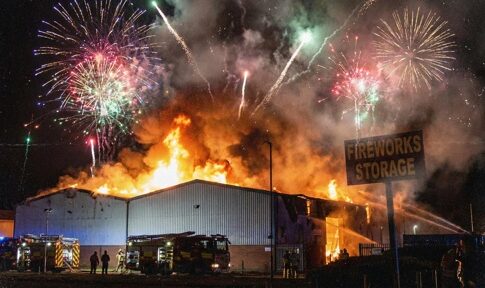
Utah’s emergency fireworks ban, passed under wildfire pressure, now tests the line between real safety needs and creeping government control over how Americans celebrate their freedom.
Story Snapshot
- Utah’s governor declared a state of emergency and froze personal fireworks through July 5 as huge wildfires rage.
- More than 350 wildfires have burned over 140,000 acres, most started by people, in bone-dry drought conditions.
- A fireworks businessman says the order is not enforceable and vows to keep selling, warning it could backfire.
- Conservatives now face a hard question: how to protect homes and ranchland without normalizing open-ended emergency powers.
Historic Wildfire Threat Collides With Independence Day Traditions
Utah Governor Spencer Cox has declared a statewide emergency as the Cottonwood Fire and other blazes turn large parts of the state into a tinderbox ahead of Independence Day.[3] The Cottonwood Fire alone has burned more than 70,000 acres with little containment, while the Iron Fire has torched tens of thousands more.[3] State officials report more than 353 wildfires this season, burning over 141,000 acres. Many Utah families now watch smoke on the horizon weeks before they should be watching fireworks in the sky.[4]
Fire experts say the danger is not just big flames but the perfect storm feeding them. All 29 Utah counties are in drought, with many in extreme drought.[10] Winds have pushed near 50 miles per hour in some fire zones, with humidity dropping into the single digits.[10] The National Weather Service issued a rare “particularly dangerous situation” red flag warning, a first for its Salt Lake City office.[8] In plain terms, one spark in the wrong place could race across dry grass before firefighters even arrive.[12]
Why Cox Reached For Emergency Powers And A Statewide Fireworks Ban
Governor Cox responded with Executive Order 2025-08, declaring a 30-day state of emergency and authorizing a temporary ban on personal fireworks through July 5.[3] He also opened access to about 120 million dollars in state funds for fire suppression and recovery, while expecting federal help to cover most suppression costs on federal land.[3] The order gives the state forester power to restrict fireworks even in cities, temporarily overriding a 2024 law that had limited that authority in urban areas.[8]
State Forester Jamie Barnes says nearly 80 percent of Utah’s wildfires this year have been started by people.[10] Ignition sources include vehicles dragging chains, debris burns, target shooting, and fireworks.[10] That matches national research showing drought, heat, and wind turn dry grasses and brush into easy fuel for any human spark.[12] From a safety standpoint, Cox argues he is not attacking celebration but cutting off one major source of ignition during the most dangerous fire window of the year.[10]
Fireworks Sellers, Legislators, And Conservatives Push Back On Overreach Risks
Not everyone agrees the governor used the right tool. Fireworks company co-owner Brian Leahy says his lawyers are reviewing the order and argues that “no municipality can enforce this,” promising that sales will continue without new limits.[11] He warns that banning fireworks inside neighborhoods might simply push people out into remote desert areas to light them anyway, where fires are harder to reach and control.[11] His stance highlights a gap between what the state orders on paper and what it can actually police on the ground.
Some lawmakers also question the move, raising concerns that the governor is sidestepping the 2024 statute that restricted statewide fireworks bans in urban areas.[8] Their worry is not only this year’s order, but the precedent it sets. If a governor can override that law during a fire emergency, could a future left-wing governor use the same playbook to restrict other activities in the name of “safety” or “climate” down the road? For many conservatives, that is the deeper issue: once emergency powers grow, they rarely shrink.
Balancing Fire Safety With Freedom, Local Control, And Common Sense
Western states have used temporary holiday fireworks limits before during extreme drought and fire years, and Utah is not unique there.[1] But this order lands at a sensitive time. It affects Independence Day celebrations during America’s 250th anniversary, in a state where patriotism, faith, and family barbecues are part of the culture. Many residents accept that this fire season is different and that one bad blaze can wipe out homes, ranches, and hunting land built up over generations.[4] They want safety, but they also want to be treated like responsible adults, not children.
JUST IN: Mayor Mark Anderson announced Logan City’s full support for the statewide fireworks ban implemented yesterday by Utah Governor Spencer Cox. Personal fireworks are prohibited July 2–5, but the city's July 3 professional fireworks show will go on as planned. pic.twitter.com/xbct2duxsM
— KSL 5 TV (@KSL5TV) June 26, 2026
For conservatives, the path forward likely means two demands at once. First, insist on serious transparency: release the full executive order, spell out the legal basis, and commit to a hard sunset once fire danger eases. Second, shift more power back to counties and cities, which know their terrain, fuel loads, and enforcement capacity best. Utahns can support firefighters and protect their communities without letting emergency orders become the new normal every time the political class declares a crisis.[3]
Sources:
[1] Web – Utah declares state of emergency — and restricts fireworks as US …
[3] Web – Utah governor restricts fireworks as largest U.S. wildfire surges …
[4] Web – Utah governor restricts fireworks as largest US wildfire surges …
[8] Web – Utah declares state of emergency, restricts fireworks as US largest …
[10] Web – Utah restricts fireworks, declares state of emergency as largest US …
[11] Web – Utah restricts fireworks, declares state of emergency as largest US …
[12] Web – Utah governor declares state of emergency banning fireworks for …