
When two packed jets nearly met at a Boston runway crossing, it exposed how even “routine” safety systems still depend on fallible people inside a sprawling federal bureaucracy.
Story Snapshot
- A Delta jet aborted landing at Boston Logan to avoid an American plane taking off on an intersecting runway.
- The Federal Aviation Administration (FAA) is investigating how both jets were cleared onto crossing paths at the same time.
- Delta says its crew followed procedures and worked with air traffic control, raising questions about deeper system failures.
- Runway close calls are not rare, but serious ones keep happening despite years of federal safety campaigns and spending.
What Happened on the Runways at Boston Logan
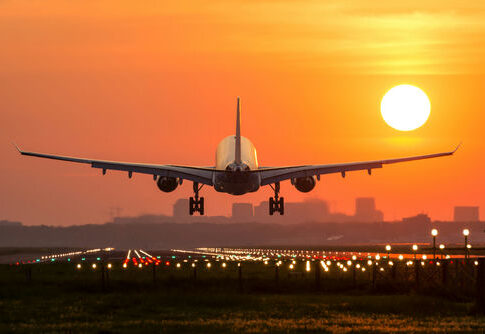
The Federal Aviation Administration is investigating a near-miss at Boston Logan International Airport after two large passenger jets ended up on intersecting paths late Saturday morning.[3] A Delta Air Lines flight arriving from Dallas, Flight 2351, was on final approach to land when an American Airlines jet started its takeoff roll on a runway that crossed the Delta plane’s landing path.[3] To avoid a possible collision, the Delta pilots performed a “go-around,” which means they stopped the landing and climbed away.
Federal officials say the Delta aircraft carried 129 passengers and six crew members and later landed safely, with everyone deplaning normally.[3] Delta states that its pilots worked in coordination with air traffic control to carry out the go-around maneuver.[3] Local TV coverage and flight-tracking data suggest the situation developed quickly, as both planes were cleared on intersecting runways around 11:30 a.m. before anyone called off the landing.[2] No injuries were reported, but investigators now have to reconstruct every radio call and timing decision.
How a “Routine” Go-Around Became a Close Call
The FAA describes go-arounds as standard, safe procedures that pilots or controllers can start anytime they see a risk.[3] In other words, the go-around itself worked exactly as the system intends: pilots saw a threat and used a practiced maneuver to create space and time. The real question is why the threat existed in the first place. Reports say both jets were cleared for movements that would have put them at the same point in space, at nearly the same time, on crossing runways.[2]
That kind of setup is what experts call a potential runway incursion, which means something or someone is in a protected runway area when it should not be.[19] Past Federal Aviation Administration and Department of Transportation reviews show that many runway incursions start with basic problems: misheard instructions, rushed clearances, or confusion about which runway is in use.[16] Investigators will review tower staffing, fatigue, radio quality, and whether any controller or crew missed or misunderstood a clearance. At this stage, officials are not blaming one person; they are treating it as a possible system breakdown.
A Pattern of Near Misses in a “Safe” System
This Boston event is not a one-off. Federal data show more than 1,700 runway incursions a year in the United States, but only a small share are serious “Category A or B” cases that narrowly avoid disaster.[14] A recent review found that in fiscal year 2024, only about half of one percent of incursions were in those most dangerous categories, after a push that cut serious events by roughly 60 percent.[15] That sounds impressive on paper, yet each close call still puts hundreds of lives in play and rattles public trust.
Independent safety studies find that most incursions are tied to pilot deviations, usually failing to follow air traffic instructions or crossing a runway without proper clearance.[17] Others trace back to controller errors, poor airport design, or simple distraction in a busy cockpit or tower.[16] Technology like surface radar, runway status lights, and warning systems has helped lower the most severe incidents over the past decade.[17] Still, these tools are only as strong as the people and procedures using them. When a controller clears one jet to land and another to depart on intersecting runways, gadgets cannot fully undo that choice.
Why This Matters Beyond One Scary Moment
For many Americans, this kind of story hits a nerve that goes beyond aviation. People on both the right and the left see a pattern: Washington agencies promise safety, spend billions, and roll out new programs, yet near disasters keep showing up in the news. The FAA has run runway safety campaigns for more than three decades and advertises major gains and new technology.[21] Still, families boarding a flight hear about near collisions and wonder if the federal guardrails are as strong as the talking points claim.
CLOSE CALL AT BOSTON LOGAN.
ATC: "American 3161, where are you going?"
American 3161: "You cleared us for takeoff, 3161."Delta Air Lines Flight 2351 performed a go-around at Boston Logan around 11:30 a.m. local time today after its crew received a "potential traffic" advisory… pic.twitter.com/oIuC8rr8x1
— Turbine Traveller (@Turbinetraveler) June 21, 2026
Conservatives look at this close call and see another huge bureaucracy that cannot always get the basics right, even as the government piles on complex rules in other parts of life. Liberals see a system under pressure from cost-cutting, thin staffing, and rising traffic that may be pushing workers to their limits. Both sides see a familiar theme: those in charge say the system is “safe enough,” but the people who pay the price sit in the back of the plane, trusting that no one in the tower has a bad day.
What to Watch as the Investigation Unfolds
The formal investigation will take months and will likely produce a dry report filled with timelines and charts. Buried in it will be the answers that matter: who cleared what, when; whether standard procedures were followed; and which layers of protection failed or barely worked in time. That report will also hint at whether this was a rare human lapse or another sign that the system is under strain as traffic grows and airports squeeze more movements into the same runways.
For travelers and citizens, the key is not to panic every time a pilot executes a go-around. That maneuver is part of safety, not proof of chaos. The real test is whether the FAA uses this scare to tighten training, staffing, and technology in ways that put passengers ahead of politics and prestige. When a near miss like Boston’s becomes just another headline that fades without real change, it feeds the growing belief that the people running Washington’s systems are more focused on protecting themselves than protecting the public.
Sources:
[2] Web – FAA investigates incident that forced a Delta flight to abort landing
[3] YouTube – Close call at Logan Airport between Delta, American flights under …
[14] Web – Current Advisories | Delta Air Lines
[15] Web – Runway Incursion: 2026 Verified Stats – WifiTalents
[16] Web – [PDF] FAA Has Taken Steps To Prevent and Mitigate Runway Incursions …
[17] Web – The Dangers of Runway Incursion and How to Prevent Them
[19] Web – [PDF] Preventing Runway Incursions – SKYbrary
[21] Web – Statistical modelling of runway incursion occurences in the United …