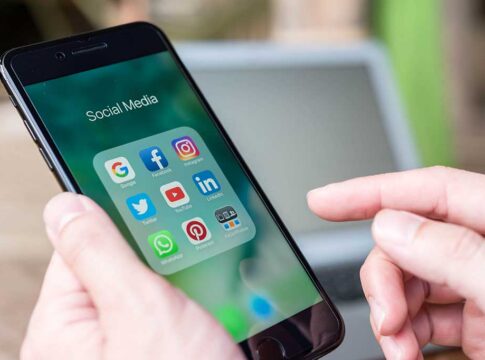
Britain’s plan to ban social media for kids under 16 sounds like child protection — but enforcing it may require every adult in the country to scan their face just to log on.
Story Snapshot
- UK Prime Minister Keir Starmer announced a ban on social media access for children under 16, citing bullying, addiction, and mental health harm.
- Enforcing the ban would require age checks for all users — potentially including facial scans — raising serious privacy concerns for adults and children alike.
- Tech industry groups and researchers warn the ban could push kids toward less safe, unregulated platforms instead of protecting them.
- The Trump administration criticized the plan, saying it would burden American tech companies and restrict free speech.
Starmer’s Case: Protecting Kids From a Harmful Internet
Prime Minister Keir Starmer announced the ban in June 2026, saying social media was making children unhappy, enabling bullies, and fueling addiction. He said thousands of parents told the government their children were hooked on social media. A government consultation that ran from January to May 2026 reportedly showed 90% of respondents supported a ban, though the full methodology and question wording have not been made public.[6] Starmer compared the policy to age limits on alcohol sales.
The ban would cover not just traditional social platforms like TikTok, Snapchat, and YouTube, but also live-streaming services and gaming platforms where strangers can contact children.[1] Starmer said the government already has legal tools to act, pointing to the Online Safety Act and the Children’s Well-being and Schools Act as the framework for enforcement.[3] He acknowledged some children would find workarounds, but said that was no reason to abandon the effort.
The Hidden Cost: ID Checks for Everyone
Here’s the problem most headlines skip: to stop kids under 16 from logging on, platforms must verify that every user is old enough. That means adults will also have to prove their age. The UK’s Information Commissioner’s Office has already recommended that platforms use facial age checks, digital ID, or one-time photo matching to confirm users’ ages.[10] In plain terms, everyone who wants to use social media may end up submitting a face scan or government ID just to post a photo.
Critics warn this creates something that looks a lot like a national ID system through the back door. Analysis of the policy’s mechanics notes that platforms will be forced to verify all users to avoid penalties under the Online Safety Act — meaning the age check falls on every account, not just young ones.[9] The Electronic Frontier Foundation has flagged that the UK’s approach shifts power directly to a single government minister, who can restrict internet access without having to prove specific harms to young people.[16]
Experts Divided, Teens Skeptical
The tech industry group techUK says there is an overwhelming consensus against a blanket ban among researchers, academics, civil society groups, and young people themselves.[13] The group warns the ban could push children toward less regulated or encrypted platforms, reduce digital literacy, and widen the gap between kids with savvy parents and those without. Reuters reported that experts are divided on whether an outright ban would work, and young people in London told the outlet they opposed the restrictions.[17]
Britain will ban children aged under 16 from using a range of social media apps, including Snapchat, TikTok and YouTube, to protect them from harmful content and excessive screen time, Prime Minister Keir Starmer said Monday. https://t.co/aKEiGuhbqh
— PBS News (@NewsHour) June 15, 2026
Australia rolled out a similar under-16 ban in December 2024, covering ten platforms including Facebook, TikTok, Instagram, and YouTube. Platforms face fines of up to AU$49.5 million for repeated violations, and age checks can include government IDs, facial recognition, or behavior-based age guessing.[18] Starmer cited Australia as a model, but the Australian experience has also shown how hard enforcement is and how easily determined teens can get around the rules.
A Pattern Both Sides Should Watch
The Trump administration pushed back on the UK plan, warning it would place heavy compliance costs on American tech companies and limit free speech.[5] That friction matters — it shows how one government’s content rules can become another country’s trade and speech problem. Meanwhile, the UK’s own Parliament has already had a messy back-and-forth on this. The House of Commons voted down a House of Lords version of the ban in March 2026 by 307 votes to 173, then proposed its own version that handed even more control to a single minister.[16]
Whether you think social media is poisoning a generation or whether you fear governments using child safety as cover for broader control, this story deserves close attention. The real question isn’t just whether kids should be on TikTok. It’s who gets to decide what everyone can see online — and what they’ll need to hand over to prove they’re allowed to look.
Sources:
[1] Web – UK’s Left-Globalists PM Starmer Announces Under-16 Social Media Ban …
[3] YouTube – Under-16s social media ban announced by Keir Starmer …
[5] YouTube – BREAKING: Keir Starmer announces under-16s social media ban
[6] Web – Keir Starmer’s social media ban for under-16s could backfire …
[9] Web – Police bosses urge unsafe social media to be blocked for under-16s
[10] Web – UK set to ban under-16s from social media, livestreaming … – Reddit
[13] YouTube – Minister hints at social media ban for under-16s
[16] Web – The privacy risks of banning social media for under 16s – Reddit
[17] Web – UK Politicians Continue to Miss the Point in Latest Social Media Ban …
[18] Web – UK PM Starmer set to ban ‘harmful’ social media for under-16s