
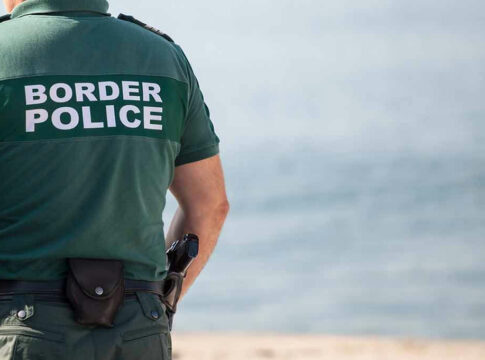
As immigration checkpoints expand deep inside the country, a quiet legal battle is deciding whether federal power stops at the border—or at your front door.
Story Snapshot
- Federal law gives Border Patrol broad warrantless powers within 100 miles of U.S. borders, covering two-thirds of Americans.[4][7]
- Trump-era enforcement tools like registration rules and interior crackdowns target illegal immigration while still facing court and activist pushback.[1][2][6]
- Civil rights groups call these checkpoints “constitution-free zones,” but the Fourth Amendment still applies and limits abuse.[7][19]
- New tech surveillance and fast-track deportation raise fresh questions about government overreach and privacy for law-abiding citizens.[8][20]
Border Powers Now Reach Far Beyond the Border
Federal immigration law dating back to the 1952 Immigration and Nationality Act gives United States Customs and Border Protection agents special authority near the border that most Americans never hear about. That law lets immigration officers conduct certain warrantless stops and searches within 100 miles of any land border or coastline, a zone that covers major cities like New York, Los Angeles, and Chicago and roughly two-thirds of the U.S. population. Supreme Court rulings like United States v. Martinez-Fuerte later confirmed that permanent interior checkpoints, when reasonably located and used for brief citizenship questions and visual vehicle inspection, can be constitutional.[4][7][19]
For conservatives who want the government to enforce immigration laws, this 100-mile authority looks like a vital tool to protect sovereignty and stop illegal crossings before they spread inland. Border Patrol agents can question people they reasonably believe may be immigrants and arrest without a warrant when they suspect immigration violations and believe someone may flee. A Pew research brief notes there were at least 35 permanent traffic checkpoints as of 2014, with agents also using temporary checkpoints and transportation checks inside that border belt to catch those who slipped through ports of entry. These tools aim to secure the border without sending agents door to door across the whole nation.[4][21]
Trump-Era Tools: Registration, Interior Enforcement, and Deportations
Donald Trump’s first term set the stage for the tougher interior enforcement many conservatives demanded, and those policies still shape the landscape in his second term. The 2017 executive order “Enhancing Public Safety in the Interior of the United States” expanded priorities to essentially all unauthorized individuals, not only those with serious criminal records, and ordered the revival of the Secure Communities program so local jails would more closely cooperate with federal immigration agents. The administration later reported deporting more than 605,000 illegal immigrants in 2025, along with about 1.9 million “self-deportations,” arguing that firm enforcement produced negative net migration and helped restore control of the border.[2][6][7][22]
At the same time, the Department of Homeland Security moved to revive long-dormant tools like the 1940 Alien Registration Act to require undocumented immigrants to register, warning of possible misdemeanor charges for those who refuse. Civil rights groups admit the government is threatening criminal prosecution but point out that courts have not yet clearly upheld using that registration law against today’s undocumented population. For many conservatives, the registration push is about basic rule of law—knowing who is in the country illegally—yet it happens inside a legal gray zone that activists are eager to challenge.[1]
Checkpoints, Civil Rights Claims, and the “Constitution-Free Zone” Myth
As Border Patrol uses checkpoints more often inside the 100-mile zone, activist groups have tried to brand these areas as “constitution-free zones,” a phrase that understandably alarms patriots who care deeply about the Bill of Rights. The American Civil Liberties Union and allied organizations highlight stories from border regions where residents describe racial profiling, prolonged detentions, and searches based on dogs “alerting” to contraband that never appears. They argue that some checkpoints go far beyond the brief questions the Supreme Court allowed, turning routine drives to work or church into tense encounters for anyone who “looks foreign.”[3][7][10][11]
Yet even the civil liberties lawyers agree on a key point often buried in their rhetoric: the Fourth Amendment still applies in the 100-mile zone. Their own materials state that Border Patrol cannot legally rely on race or ethnicity alone to justify a stop and that law enforcement may not perform stops based solely on race, national origin, religion, sex, or ethnicity. The Supreme Court’s Martinez-Fuerte decision requires that checkpoint stops be brief, with limited questions about residence status and simple visual inspection of the vehicle exterior. That means abuses can and should be challenged in court, but the checkpoints themselves are not blanket violations of the Constitution.[7][14][19]
Nationwide Enforcement, Surveillance Tech, and the Line on Government Power
Outside the 100-mile belt, immigration agents still operate, but their powers are narrower and more like other law enforcement. The Forum Together explainer on Border Patrol authority notes that agents outside this zone cannot run immigration checkpoints or board buses and trains without meeting normal standards like reasonable suspicion. That matches broader constitutional analysis showing there is no “border exception” once you move past the border or its functional equivalent; at that point, regular warrant, probable cause, and home-entry rules apply. Even a 2025 memo allowing Immigration and Customs Enforcement officers to use certain administrative warrants to enter homes for immigration arrests triggered sharp criticism because it pushes hard against traditional Fourth Amendment protections.[2][4][6]
Weigh Stations should be used as interior checkpoints to enforce immigration laws nationwide. What is the Administration waiting on? This can be done now!! pic.twitter.com/XTQ8DVyGQN
— American Truckers United (@atutruckers) June 23, 2026
At the same time, federal agencies are quietly rolling out powerful surveillance tools that worry many conservatives who value limited government. An Associated Press report describes a license plate monitoring system that tracks millions of drivers nationwide to spot “travel patterns indicative of illegal border related activities.” Combined with interior enforcement programs and fast-track deportation powers expanded during Trump’s first term, these tools could help catch cartel smugglers and human traffickers—but they also raise serious questions about how much data Washington should collect on everyday Americans who have done nothing wrong.[8][20]
Balancing Strong Borders with Core Constitutional Rights
Border enforcement research shows a long pattern: Congress expands immigration arrest and search authority, agencies stretch that authority inland, and then courts and civil rights lawyers push back when practices cross constitutional lines. For Trump supporters who want real border security after years of chaos, interior checkpoints, registration rules, and tougher deportation are signs the federal government is finally taking sovereignty seriously. At the same time, the conservative commitment to the Constitution means no blank check for federal power; checkpoints must stay within Supreme Court limits, and any race-based profiling or warrantless home raids needs to be exposed and stopped.[7][18][19][24]
That balance is where today’s fight sits. Activist groups funded by major progressive donors frame every checkpoint as abuse, often ignoring the clear legal authority Congress and the courts have recognized. Meanwhile, some federal lawyers press aggressive theories that test the edge of the Fourth Amendment. For engaged citizens, the takeaway is simple: demand both strong, lawful immigration enforcement and strict respect for constitutional rights. Support policies that secure the border, insist on transparency like Freedom of Information Act requests for checkpoint data, and keep a close eye on any effort—left or right—that tries to turn emergency border powers into permanent tools of nationwide surveillance.[2][4][18][20]
Sources:
[1] Web – PAPERS PLEASE: IMMIGRATION CHECKPOINTS SET UP ACROSS NATION…
[2] Web – Know Your Rights: Trump’s Registration Requirement for Immigrants
[3] Web – Summary of Executive Order “Enhancing Public Safety in the Interior …
[4] YouTube – Study finds Trump administration cut legal immigration far …
[6] Web – [PDF] Trump’s Little-Known Immigration Rules as Executive Power Grab
[7] Web – Secure the Border – The White House
[8] Web – 100 Mile Border Zone | American Civil Liberties Union
[10] Web – Summary of Executive Orders and Other Actions on Immigration
[11] Web – Hearing Reveals Ongoing Civil Rights Abuses at Border Patrol …
[14] Web – Exposing human rights violations behind laws that criminalize …
[18] Web – Legal authority for the Border Patrol – help.CBP.gov
[19] Web – 100 miles of the border, DHS has checkpoints where they can …
[20] Web – The Legacy of Racism within the U.S. Border Patrol
[21] Web – “The Praetorians: An Analysis of U.S. Border Patrol Checkpoints …
[22] Web – Border Patrol is monitoring US drivers and detaining those … – …
[24] Web – [PDF] Immigration Enforcement in the United States