
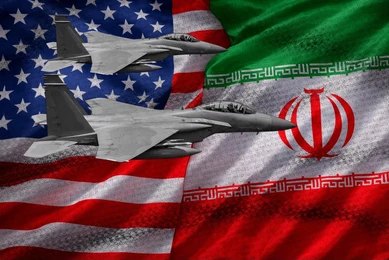
The United States says it struck more than 80 Iranian military targets after attacks on three commercial tankers in the Strait of Hormuz, marking another sharp escalation in tensions with Tehran.
Story Snapshot
- The U.S. military says its latest strikes on Iran answer attacks on three commercial tankers in the Strait of Hormuz.
- U.S. Central Command reports hitting over 80 Iranian targets, including air defenses, radar, anti-ship missiles, and more than 60 small boats.
- Iran denies clear responsibility for the ship attacks and accuses Washington of breaking a ceasefire deal signed only weeks ago.
- The showdown threatens global oil flows and The escalation has renewed debate over U.S. military involvement, energy security, and the risk of a broader regional conflict.
What CENTCOM Says Happened in the Strait of Hormuz
U.S. Central Command announced that American forces carried out a new round of “offensive strikes” against Iran on July 7, saying they were an immediate response to Iran’s latest attacks on commercial ships in the Strait of Hormuz. The military named three vessels it says were hit: the Marshall Islands–flagged M/T Al Rekayyat, the Saudi Arabia–flagged M/T Wedyan, and the Liberian–flagged M/T Cyprus Prosperity. Commanders called Iran’s behavior “unwarranted” and a “dangerous” violation of an existing ceasefire.
Central Command said U.S. forces struck more than 80 locations across Iran tied to the attacks. Targets included air defense systems, command and control centers, coastal radar, anti-ship missile sites, and over 60 small boats operated by Iran’s Islamic Revolutionary Guard Corps in and near the strait. The stated goal was to reduce Iran’s capacity to threaten international trade through one of the world’s most important energy routes, where about one-fifth of global oil and gas passes each day.
Escalation After Earlier Tanker and Drone Strikes
This is not the first time in recent weeks that U.S. forces have hit Iranian targets after ship attacks in the same narrow waterway. On June 26, Central Command reported strikes on Iranian missile and drone storage sites and coastal radar after U.S. officials said Iran struck the cargo ship M/V Ever Lovely with a one-way attack drone while it exited the strait along the coast of Oman. U.S. officials said that incident “clearly violated” a ceasefire and harmed freedom of navigation through the corridor.
One day later, on June 27, the U.S. military launched more strikes after Iran used another one-way attack drone against the tanker M/T Kiku. Central Command said Iran had been given a chance to honor the ceasefire but “elected not to,” so American aircraft attacked surveillance, communications, air defense, drone storage, and mine-laying capabilities inside Iran. These back-to-back rounds of strikes set the stage for the much larger operation that hit over 80 targets after the attacks on Al Rekayyat, Wedyan, and Cyprus Prosperity.
Competing Stories About the Ceasefire and Responsibility
While U.S. officials firmly blame Iran for the three latest tanker attacks, Tehran has not openly admitted carrying them out. Iranian state media and diplomats instead accuse Washington of breaking a memorandum of understanding that was supposed to guide talks toward ending the wider war, arguing that U.S. airstrikes violate that deal. The ceasefire text itself has not been released to the public, which makes it hard for ordinary citizens in any country to judge who is telling the full truth.
No independent international body has publicly released forensic findings identifying responsibility for the tanker attacks. Central Command’s claims rest on U.S. intelligence and military tracking, which the Pentagon does not fully disclose for security reasons. For Americans who still remember past wars sold on shaky or secret evidence, this information gap feeds both left and right’s suspicion that powerful officials expect blind trust while hiding key details.
More Warships, Oil Sanctions, and Rising Global Stakes
As the strikes rolled out, U.S. officials also moved on the financial front. The Treasury Department revoked a waiver that had allowed some Iranian oil sales, calling Iran’s actions in the strait “wholly unacceptable.” Market analysts said the renewed sanctions and military escalation contributed to higher oil prices. For many Americans, it feels like another foreign crisis where they pay the bill while elites make the decisions.
Central Command has also kept a heavy military presence in and around the Strait of Hormuz for months, escorting commercial ships and warning that U.S. forces are “vigilant, lethal, and ready.” Reports indicate that more than 20 U.S. warships are now operating in the broader region, from destroyers and cruisers to support vessels. Supporters see this buildup as necessary to protect global trade and deter Iran. Critics, across the political spectrum, worry it edges the country toward a long, open-ended conflict with unclear goals and little real debate in Congress.
Long Pattern of Crisis — and Shared Public Frustration
Experts note that the latest showdown fits a pattern going back decades, with Iran harassing ships and the United States answering with sanctions and strikes as both sides argue over who violated which agreement first. This year alone, Iran has tried to close the strait, while the United States has at times blockaded ships that visited Iranian ports and run quiet convoys to guide other vessels through the danger zone. Each step brings new “red lines” and new risks, but not a lasting fix.
The latest exchange underscores how quickly incidents in the Strait of Hormuz can affect global shipping, energy markets, and the broader strategic relationship between Washington and Tehran.
Sources:
x.com, centcom.mil, crisisgroup.org, yipinstitute.org, csis.org