
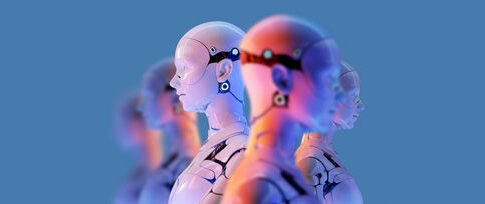
The important shift is not that robots have replaced surgeons; it is that humanoid robots have now proven, in a controlled preclinical setting, that they can execute real laparoscopic surgical steps under teleoperation. That moves humanoid robotics from spectacle toward a genuine operating-room question: what parts of surgery can be translated from human hands to remote embodied machines, and how much validation stands between a pig study and a human patient?
Key Points
- Two teleoperated humanoid robots completed two gallbladder-removal procedures on live pigs in a preclinical trial at UC San Diego.
- One operation paired a humanoid robot with a human assistant; the other used two humanoid robots working together.
- The work is a proof-of-concept, not a human clinical deployment, but it is among the first reported demonstrations of teleoperated humanoid robots completing full laparoscopic procedures on living tissue.
- The real significance lies in dexterity, teleoperation, and scale: humanoid form may be cheaper and more adaptable than conventional surgical platforms, but human trials, regulatory scrutiny, and failure-mode testing still separate demonstration from practice.
What Actually Happened in the Operating Room
UC San Diego researchers reported that two teleoperated humanoid robots completed two laparoscopic cholecystectomies during a preclinical trial, meaning gallbladder removals performed on live pigs rather than human patients. In one case, a humanoid robot worked with a human surgeon acting as assistant; in the other, two humanoid robots performed the procedure side by side as a robot-robot team. The procedures included the core tasks that define laparoscopic surgery: tissue retraction, dissection, clipping, and extraction.
That distinction matters. This was not autonomous surgery, and it was not a publicity demo in which a robot merely held a camera or passed an instrument. It was a test of whether a humanoid platform, remotely controlled by humans, could handle the sequence of fine motor actions required to remove an organ through minimally invasive access. The answer, in this narrow setting, was yes.
Why Humanoid Form Is the Real Story
Most surgical robots today are specialized machines built for a narrow function. Humanoid robots are different because they are meant to operate in human environments using human-compatible tools, postures, and workspaces. That matters in an operating room, where the environment is crowded, instrument-dependent, and full of constraints that were designed around people rather than around bespoke industrial hardware.
Michael Yip, a senior author on the UC San Diego work, has argued that humanoid robots could be cheaper, smaller, and easier to deploy to hard-to-reach places, expanding access to critical procedures. That claim is plausible for the same reason humanoids are interesting in warehouses, factories, and disaster settings: if the robot can move through human-built spaces without a redesign of the environment, deployment becomes easier. In surgery, that advantage is especially attractive because the bottleneck is not just precision; it is the whole clinical ecosystem around precision.
Unlike factory work, surgery involves constantly changing anatomy, bleeding, moving tissue, and unexpected complications. Tissue moves, deforms, bleeds, and responds to force in ways that make the field much harder than industrial pick-and-place robotics. Teleoperation helps because it keeps a human judgment loop in charge while offloading the physical execution to a machine. That is the bridge this experiment tested.
Teleoperation: The Old Idea Behind the New Milestone
Teleoperation is hardly new. Surgeons have controlled remote systems for years, and the basic logic is straightforward: a human operator sits at a console, receives visual and sometimes haptic feedback, and directs a robot to act at a distance. In the surgical context, teleoperation has long been valued because it can preserve human decision-making while improving steadiness, access, and reach.
What is new here is not remote control itself, but the combination of teleoperation with a humanoid body plan. That combination is strategically important because it narrows the gap between general-purpose embodied robots and surgical systems built for one room, one workflow, and one class of motions. The UC San Diego trial suggests that humanoid platforms can already handle a meaningful subset of laparoscopic maneuvers when the operator supplies judgment and the robot supplies motion.
The Real Meaning of a “First”
Every robotics milestone arrives wrapped in a familiar temptation: to treat the first successful demonstration as a straight-line forecast of clinical adoption. That is usually wrong. Surgical robotics has a long history of landmark proofs that were technically real but commercially and medically incomplete, because animal studies do not settle the harder questions of patient safety, workflow integration, liability, training, and outcomes. Earlier milestones in robotic surgery were celebrated as turning points and then spent years being absorbed into regulation and comparative evidence.
This is why the UC San Diego result should be read as an engineering proof, not as a clinical conclusion. The value of the study is that it answers one important engineering question: can a humanoid robot, under teleoperation, carry out the mechanical requirements of a real surgical procedure on living tissue? It can. What remains unknown is how reliably such a system performs across complications, anatomical variation, blood, fatigue, and the unpredictable messiness that defines human surgery.
Why Animal Success Does Not Equal Human Readiness
The preclinical setting is the crucial boundary. Large non-primate mammals are useful because they approximate some surgical conditions while remaining ethically and operationally distinct from human trials. But base rates in medical technology are unforgiving: many devices that perform well in animal models never cross the long regulatory path to routine clinical use. The gap is not rhetorical; it is structural. Before any human use, regulators will require evidence that the system is safe, reliable, and at least as effective as current surgical methods.
That is where the historical context matters. Surgical robotics has repeatedly advanced through dramatic demonstrations first and cautious validation second. The field’s most durable gains have come not from headline-grabbing autonomy but from incremental improvements in precision, ergonomics, visualization, and access. Humanoid surgery will likely follow the same path. The robot body may be novel, but the evidentiary burden is old-fashioned and severe.
🚨 HUMANOID ROBOTS JUST PERFORMED SURGERY FOR THE FIRST TIME
Science fiction is becoming reality!
Researchers successfully used humanoid robots to perform gallbladder surgery in a groundbreaking preclinical study. The robots were fully controlled by surgeons and operated on… pic.twitter.com/PDOEEyxpQ7— Next Science (@NextScience) July 12, 2026
What Comes Next for Surgical Robotics
If this line of research matures, the practical payoff will not be “robots replacing surgeons.” It will be robots extending surgeons. The more realistic near-term use cases are assistance, instrument handling, room preparation, and constrained procedural steps in settings where staffing is thin or expertise is far away. That is already the direction of surgical robotics more broadly, where manufacturers and researchers increasingly describe the future as augmentation rather than replacement.
The more ambitious long-term claim is that humanoid robots could reduce the need for expensive dedicated platforms by bringing surgical skill into a more general-purpose body. That is an appealing economic thesis, especially if the hardware becomes robust, compact, and sufficiently dexterous. But the hardest problems are still in front of the field: hand stability, force feedback, perception under occlusion, sterile operation, and safe behavior when anatomy does not cooperate. Those are not minor engineering details; they are the difference between a successful demonstration and a trusted medical tool.
The UC San Diego study therefore lands in a very specific place in the history of robotics. It is not the end of surgical robotics, and it is not the beginning of robot surgeons in human hospitals. It is something more interesting: the first credible evidence that humanoid bodies, controlled by human surgeons, can perform genuine operative work inside a living organism. Much of the recent attention in robotics has focused on autonomy, making this teleoperated milestone particularly notable.
Sources:
feedpress.me, forbes.com, nypost.com, mashable.com, facebook.com, instagram.com, youtube.com, harvardmagazine.com, pmc.ncbi.nlm.nih.gov, techtimes.dexerials.jp