
Iran quietly told Trump’s team that firing missiles at ships in the Strait of Hormuz was “a mistake” — even as both countries keep turning a deadly shipping lane into a battlefield.
Story Snapshot
- News reported that Iranian officials privately told Trump advisers the attacks on commercial ships were “a mistake,” though Iran has not publicly confirmed that account.
- U.S. officials say Iran’s Islamic Revolutionary Guard Corps hit at least three tankers with missiles or drones, damaging ships but causing no deaths.
- The United States answered with massive strikes on Iranian military targets, hitting dozens of sites tied to attacks on shipping.
- Publicly, Iran says it is enforcing what it considers its rights over the strait, while both sides use the crisis to push wider political goals.
Missile strikes on tankers ignite a tense standoff
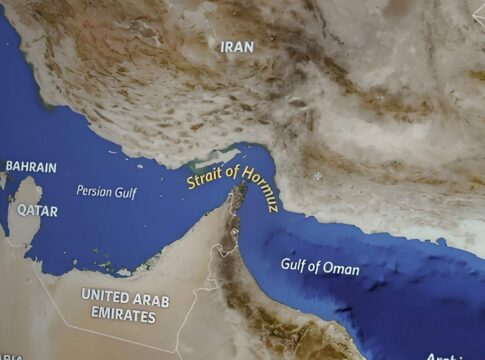
According to CENTCOM, Iran’s Islamic Revolutionary Guard Corps fired on three commercial tankers near the Strait of Hormuz, using missiles and drones to hit ships in or close to Oman’s waters. The Qatari liquefied natural gas tanker Al Rekayyat sent a Mayday call after a strike set its engine room on fire and filled it with smoke. A Saudi-flagged supertanker also suffered structural damage, but the United Kingdom Maritime Trade Operations reported no casualties or major spills, keeping this crisis just short of mass loss of life.
The United States Central Command says these attacks broke a fragile ceasefire linked to a memorandum of understanding meant to keep the Strait of Hormuz open to global trade. That strait carries a large share of the world’s oil and gas, so every strike shakes energy markets and family budgets from Houston to Hamburg. Iran did not openly claim the attacks, but its state television suggested one vessel ignored warnings, hinting that Tehran views some shipping routes as illegal or unsafe.
U.S. launches large-scale retaliation against Iranian targets
In response, U.S. forces carried out what Central Command called “powerful strikes” against Iran, hitting air defenses, coastal radar, anti-ship missile sites, and fleets of small attack boats used against shipping. Officials say the operation targeted more than 80 sites at first, then about 90 more in a second wave, to weaken Iran’s ability to threaten civilian mariners in and around the strait. The strikes reached key areas like Qeshm Island, Bandar Abbas, and Sirik, which sit near vital shipping lanes that carry energy to the rest of the world.
Iranian state media reported explosions in those southern coastal zones and said several people were wounded by shrapnel at the Sirik commercial pier, while at least one Revolutionary Guard member was killed confronting U.S. drones. Iran then fired missiles and drones at what it called U.S. military sites in Bahrain and Kuwait, claiming it targeted dozens of facilities including a Navy headquarters and an air base. A U.S. military official said all Iranian missiles and drones were intercepted or caused no major damage, showing how fast this tit-for-tat can grow without yet crossing into a full regional war.
Iran’s private “mistake” admission versus public claims of control
While this military exchange played out in public, Iranian officials privately told Trump advisers they “made a mistake” by shooting at commercial ships in the Strait of Hormuz, according to reporting shared by CBS News and others. That quiet admission suggests the strikes may have gone further than leaders in Tehran wanted, or that a local commander pushed limits while political leaders were trying to use the strait as leverage in talks. Yet, in public, Iran keeps insisting it has the right to control shipping routes it claims are unsafe or hostile.
This split—private regret, public defiance—matches past patterns. In 2016, two U.S. Navy boats drifted into Iranian waters because of a navigational error, and both U.S. and Iranian officials acknowledged the mistake even as Iran used televised images of detained sailors for propaganda. Today, Iran again appears to blame navigation and “ignored warnings” while quietly telling U.S. negotiators that missiles hitting civilian tankers were not the plan. For many Americans, this fuels the sense that powerful players spin stories while regular people and workers at sea face the real danger.
Shared worries about a chokepoint run by rival elites
The Strait of Hormuz has long been a pressure point where Iran tests how far it can push the United States and its allies by threatening the flow of energy. Some analysts argue Iran is seeking to maintain leverage over one of the world’s most important shipping routes. U.S. officials, meanwhile, admit they underestimated Iran’s readiness to close or restrict the strait when pushed, which means both sides have misread each other while thousands of civilians sail through the crossfire.
Iran privately told US negotiators that the strikes came from an "errant" sect that was trying to "derail the negotiation."
"What we're demanding is that the Iranians issue a public statement that acknowledges all channels of the Strait of Hormuz are open and they're not shooting…— Jennifer Jacobs (@JenniferJJacobs) July 10, 2026
For Americans watching from home, this episode hits many shared nerves. People on the right see Iran’s attacks as proof that hostile regimes still use force to threaten our energy supply and our economy, while doubting that Washington’s foreign policy elites really protect U.S. workers and businesses. People on the left see another example of military escalation in a distant waterway, fearing that both Tehran’s rulers and Washington’s political class treat working sailors and ordinary citizens as pawns in a bigger power game. Both sides can agree on one thing: when missiles are flying over a crucial shipping lane and officials admit “mistakes” only in private, it feels like the people paying higher prices and risking their lives are the ones with the least say.
Sources:
cbsnews.com, thehill.com, reuters.com, aljazeera.com, facebook.com, dw.com, youtube.com, reddit.com, internationallaw.blog