
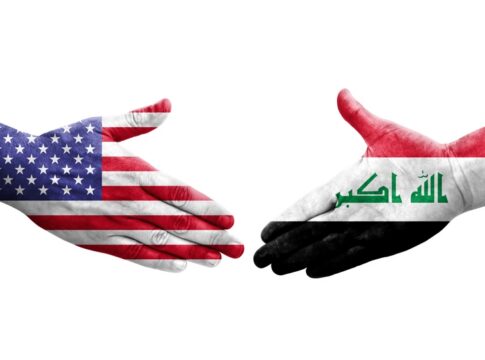
As President Donald Trump hosts Iraq’s new Prime Minister Ali al-Zaidi at the White House, two troubled democracies are quietly testing how much power their leaders—and their elites—still have over war, oil, and the future of ordinary people.
Story Snapshot
- Trump strongly backed Ali al-Zaidi’s rise and promised firm U.S. support before this visit.
- The White House meeting aims to reshape U.S.–Iraq ties around security, oil, and big investment deals.
- American troops are set to leave Iraq soon, raising real questions about who fills the power vacuum.
- Both leaders face pressure from powerful insiders and foreign players, not just their own voters.
Trump’s New Partner in Baghdad
President Donald Trump’s meeting with Iraqi Prime Minister Ali al-Zaidi caps a rapid shift in Iraq’s politics and U.S. strategy. Trump first called al-Zaidi when he was only the prime minister-designate, congratulating him and inviting him to Washington once he formed a government. In that call and later comments, Trump said the United States “stands firmly behind him” and that the new leader of Iraq is someone Washington backs “wholeheartedly”. This is not a distant, cautious relationship; it is a clear bet on one man to steer a fragile country.
Ali al-Zaidi, a businessman and political newcomer, only became prime minister this spring after months of deadlock in Iraq’s parliament. He was chosen as a compromise figure by the country’s largest bloc, which itself is made up of parties tied to Iran and other powerful factions. That means he does not rise from a bottom-up movement or a strong party base, but from elite bargaining in Baghdad. For many Americans who already feel distant from their own leaders, this looks familiar: a leader picked by insiders and backed by foreign powers, not by voters.
What Is on the Table in Washington
The White House visit is Al-Zaidi’s first foreign trip since taking office, underlining how important Washington is to his survival at home. His office says the goal is to “strengthen economic and development partnerships, attract investment, and expand the role of U.S. companies in infrastructure projects” and the energy sector. In plain terms, Trump and Al-Zaidi are talking about oil, gas, and big contracts, at a time when many Americans feel shut out of the benefits of global trade and foreign spending.
The talks are also about security and the future of American troops in Iraq. Reports say U.S. forces are expected to leave by the end of September, matching Baghdad’s own timeline for reducing foreign forces. U.S. statements linked to the invitation have stressed building a “sovereign and secure Iraq” and disarming armed groups that operate outside state control. For a U.S. audience, this sounds like ending “forever wars.” For Iraqis, it means a risky push to tame militias that have grown powerful as the central government has struggled.
Oil, Militias, and the Shadow of Iran
Trump’s early invitation to Al-Zaidi and his strong public support are part of a broader pattern in U.S.–Iraqi relations. Washington often signals which Iraqi leader it prefers, then moves quickly to offer a White House meeting, using the photo-op to show who has American backing. In this case, Trump’s team has also sent his special presidential envoy, Tom Barrack, to meet Al-Zaidi, repeat U.S. support, and talk about a “strong and mutually beneficial” relationship. These moves aim to pull Iraq closer to Washington and away from Iran, but they also fuel claims that foreign capitals, not Iraqi citizens, pick their leaders.
Al-Zaidi has promised to assert a state monopoly on weapons and curb armed groups linked to Iran. That pledge lines up neatly with U.S. goals of limiting Iran’s reach and clearing the way for Western firms to work in Iraq’s oil sector. Yet many Iraqis remember past U.S. promises that never brought real security or prosperity. Americans, for their part, see another Middle East leader welcomed in Washington while their own communities struggle with rising costs, weak public services, and a sense that foreign policy serves corporations and defense contractors first.
Shared Frustrations on Both Sides of the Ocean
Trump has framed Al-Zaidi’s rise as a “tremendous new chapter” in U.S.–Iraq relations, praising a future government “free from terrorism” and offering a “brighter future for Iraq”. Iraqi statements around the visit talk about jobs, infrastructure, and investment that will lift ordinary people. Those promises echo the American Dream and Iraq’s own hopes for stability. But both Americans and Iraqis have heard similar words from leaders before, only to watch elites and armed groups benefit most while the middle class feels squeezed.
Trump rolls out the White House welcome mat for new Iraqi Prime Minister Ali al-Zaidi.
The PM is scheduled to arrive at 11am and meet w/Trump in the Oval at 11:15am.https://t.co/ObyFR1EJWh
— darlene superville (@dsupervilleap) July 14, 2026
This meeting shows how closely security, oil, and elite power are tied together today. In Washington, many voters on the right and left worry that foreign policy is driven by global energy markets, defense spending, and quiet deals with foreign leaders. In Baghdad, citizens worry that their future is shaped by tug-of-war between Washington and Tehran, plus local militias and business tycoons. The Trump–Al-Zaidi photo-op might look like a victory for diplomacy, but it also reminds people in both countries how far their governments have drifted from the everyday struggles of families who simply want safety, honest work, and a fair shot.
Sources:
youtube.com, reuters.com, aljazeera.com, turkiyetoday.com, apnews.com, al-monitor.com, middleeasteye.net, washingtoninstitute.org